Interconnectedness was reflected in the work of seven local artists featured in this year’s Indigenous Art exhibition at Gallery 121. With a smaller, dedicated group of artists, Maureen Swann of the gallery notes, “I felt all of them were speaking very personally (through their art). People were quite impressed, I think because it seemed to have more emotional content this year.”
Mohawk artist David R. Maracle, from Tyendinaga Mohawk Territory, describes himself as both sculptor and musician—working with strings, percussion, and wind instruments, often reciting his own poetry alongside his music. He speaks to the importance of sharing both the work and the stories behind it with the broader community.
“The more we research the arts and the more we research these (ancestral) stories, it evolves more in our artwork—our sculptures, paintings, jewelry—to want to make things look beautiful; to want to make people see us as beautiful people for what we have and what we gave in the beginning.”
Many of Maracle’s works are held in collections around the world. “I have a lot of people who love my art because they believe in the stories and how I try to project our people into the light and show the goodness that we missed out on because of colonization. It forces me and other artists I know to dig a little deeper because we want the story told without a protest. Our art is a protest. You buy our art and put it on your wall, then you’re our ally.”
Janice Brant is a Kanyen’kehá:ka (Mohawk) artist from Tyendinaga Mohawk Territory, deeply connected to her community and culture. She works across a wide range of mediums, incorporating natural materials such as walnut ink, birch bark, and plant-based fibres alongside paint on paper, canvas, leather, and wood. Inspired by the natural world and the teachings of the Rotinonhson:ni/Six Nations Confederacy, her art and writing reflect a lifelong practice. Her work is held in private and public collections across Canada.
Kanyen’kehá:ka heritage and tradition are central to Jennifer Brant’s music and songwriting. Raised on her family farm in Tyendinaga Mohawk Territory, her early life blended farm work with cultural teachings, language, and music. Influenced by family, community, and traditional songs, Brant developed a voice rooted in storytelling and connection to the land. Today, her work reflects a deep respect for culture, the natural world, and the responsibility to share both.
Suzanne is a Mohawk artist from Tyendinaga Mohawk Territory on the Bay of Quinte. A visual artist and author, her work is grounded in the preservation of Indigenous knowledge, particularly the relationship between culture, the natural environment, and traditional plant teachings. Her practice reflects decades of learning, storytelling, and sharing knowledge through both visual and written forms.
Allison Lynn is a Tyendinaga-based multidisciplinary artist whose practice spans installation, textile, sculpture, printmaking, and mixed media. With a distinctive, high contrast style and use of nostalgic materials, her work explores connections between past, present, and future, often reflecting her Haudenosaunee heritage.
A Haudenosaunee artist and traditional medicine healer, Rebecca Maracle creates work rooted in respect for Mother Earth and the teachings of her people. Through her traditional designs, she shares cultural knowledge, healing, and connection to the natural world. Her work, held in private collections internationally, reflects a deeply spiritual practice—each piece created with intention, meditation, and a focus on balance across the physical, mental, emotional, and spiritual.
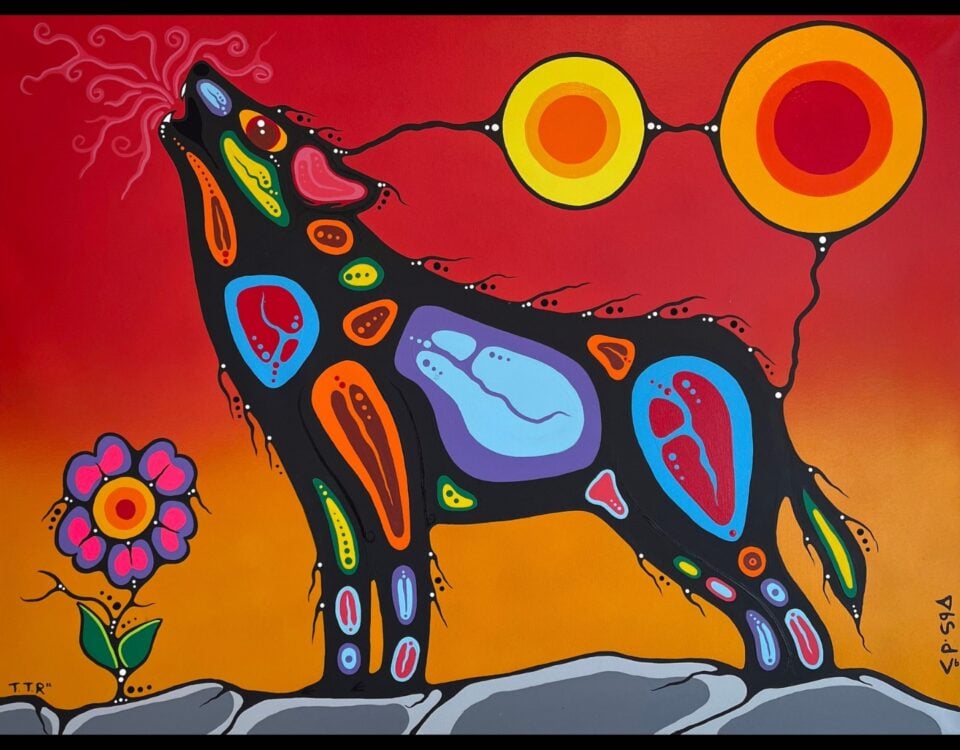
Tyler Tabobondung Rushnell (Miskwaa Ma’iingan) is an Ojibwe, Scandinavian, and Irish artist from Wasauksing First Nation whose work is inspired by the Woodland style. Known for his bold colours and symbolic imagery, his paintings explore the sacred relationship between nature and humanity while developing a distinctive, contemporary visual voice. Rushnell is also the artist behind the Toronto Maple Leafs Indigenous Celebration game warm-up jersey and logo.
The Indigenous community’s deep connection to, and respect for, Mother Earth is evident throughout the exhibition—expressed through imagery of animals, natural landscapes, flowers, and plants. There is growing interest in Indigenous art, along with the meaningful connections forming with emerging Indigenous artists—voices expected to continue gaining prominence in future exhibitions.
Ohén:ton Karihwatéhkwen, a traditional Haudenosaunee opening and closing address, expresses gratitude to the natural world and brings people together. It feels especially fitting in the context of Indigenous art—a reminder of the interconnectedness of all life, reflected beautifully in the works on display.
Painting by Tyler Tabobondung Rushnell, entitled “Howling into the Sunset”