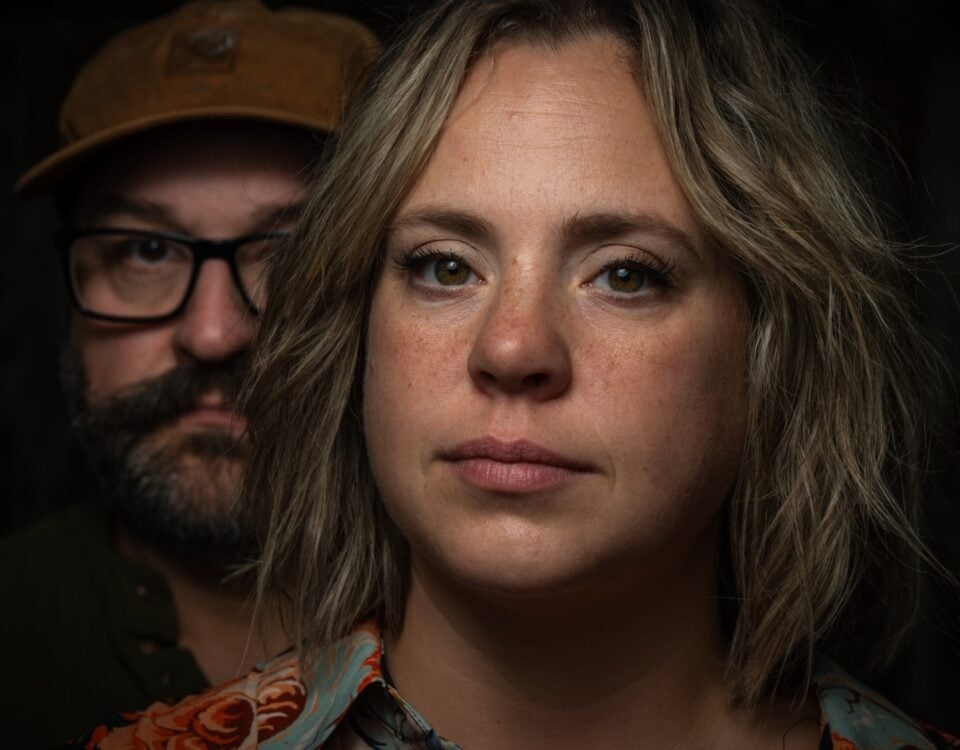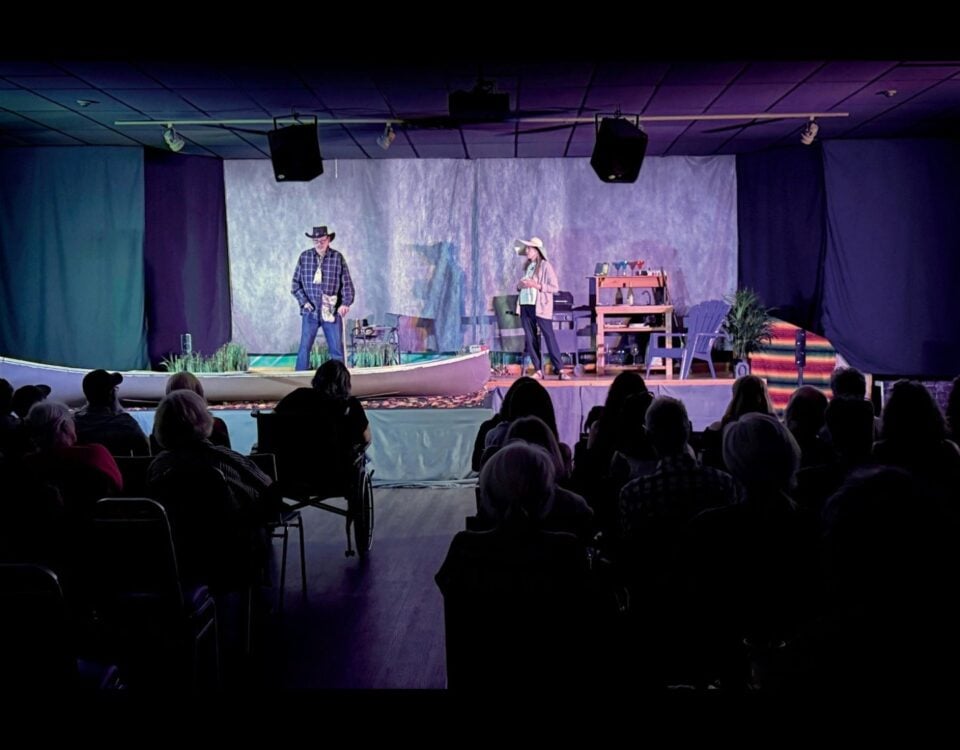
Leading up to opening night of Cottagers and Indians at Sewatokwà:tshera’ Theatre on Tyendinaga Mohawk Territory, theatre founder and director Sha’tekayenton Brant was feeling both excited and terrified. As the first major production staged in the community theatre’s new permanent home, he hoped audiences would leave feeling challenged, engaged and satisfied.
Many people in and around Tyendinaga Mohawk Territory know Sha’tekayenton through the One Dish Project, an initiative grounded in the teachings of the Dish with One Spoon Wampum Treaty between the Anishinaabe Three Fires Confederacy and the Haudenosaunee Confederacy.
The project focuses on restoring relationships between people, land, food systems, governance and community by connecting Indigenous and Western understandings of ecology, sustainability, agriculture and environmental stewardship, while centring Indigenous knowledge systems and collective responsibility.
Sha’tekayenton sees Sewatokwà:tshera’ Theatre as a natural extension of that work. If the One Dish Project is about nourishing relationships, then the theatre becomes the spoon itself—feeding people’s emotional, spiritual and cultural well-being. Fittingly, the theatre’s name literally translates as “one spoon.”
The Dish with One Spoon Wampum teaches that Nations share from a single dish using one spoon, reminding all who live on the land that its resources are to be shared responsibly, territories respected, and conflicts avoided.
Few plays embody those principles more directly than Cottagers and Indians. Written a decade ago by Curve Lake First Nation playwright Drew Hayden Taylor at the request of Tarragon Theatre, the play explores Indigenous food sovereignty and the often-competing relationships Indigenous and non-Indigenous communities have with land and water.
Inspired by an ongoing conflict in the Kawartha Lakes region, the two-person play follows Arthur Copper (played by Wihse Green), an Indigenous man determined to restore wild rice—known to the Anishinaabe as Manoomin—to local waterways. His efforts are fiercely opposed by cottager Maureen Poole (played by Janet Reyes), who believes the returning rice beds interfere with boating, swimming and fishing while diminishing the beauty and value of surrounding cottages.
Although the characters are fictional, they represent perspectives that continue to shape real conversations. Hayden Taylor deliberately balances the tension with humour, making difficult issues more accessible for audiences. It is an approach that has helped make Cottagers and Indians one of his most successful and enduring plays.
“I’m a firm believer that, all things taken into consideration, we (native and non-native people) have more similarities than differences,” says Hayden Taylor. “I tried to make both sides sympathetic. I tried to make both sides have a perspective and make them understandable.”
As the story unfolds, both characters reveal their deep emotional attachment to the land. Arthur speaks of his ancestors harvesting wild rice as a traditional food source, while Maureen reflects on generations of family memories at the cottage. Despite their opposing views, each is motivated by a profound sense of belonging.
For Sha’tekayenton, that shared humanity is central to the production.
“The whole thing with Cottagers and Indians is that both characters are stuck in who they are and what they’re doing. They both believe that they’re absolutely right and what they’re doing is good for everybody. Neither of them is willing to compromise. I’m always fighting for Indigenous rights and governance and sovereignty through One Dish Project. This helps me to look at all sides and make sure I’m operating from a good place. We can’t do anything good unless we’re sitting back looking at all the perspectives.”
That philosophy also guides Sewatokwà:tshera’ Theatre itself. Established in 2023, the company is committed to presenting one stage production each June during National Indigenous History Month. While its early productions were staged at various community locations, the Tyendinaga Mohawk Community Centre on York Road in Deseronto now serves as its permanent home—a fitting place for stories that invite audiences to listen, reflect and find common ground.
https://www.onedishproject.com/theatre
This article was previously published in the Summer 2026 Vol. 35 No. 2 issue of Umbrella.
The photograph was submitted by One Dish Project.